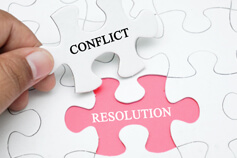
For most people a conflict is something to avoid at all costs. Therefore, they tend to distance themselves from situations where they ought to be taking control, instead of backing away from important issues.
The fact is that conflict is a normal part of life, and the ability to resolve conflicts effectively is a crucial skill for everyone to possess.
In this course we will learn and implement ways to use assertiveness and adaptability skills to manage and resolve conflicts in general and at the workplace. By doing so, you will improve your teams’ performance and develop a work environment conducive to goal attainment.
Course Methodology
The course uses a mix of interactive techniques such as team exercises, case studies, individual exercises, as well as role plays (rehearsed and impromptu), videos and group feedback.
Course Objectives
By the end of the course, participants will be able to:
Identify causes and effects of conflicts
Provide various conflict-resolution strategies for various types of conflicts
Outline and manage a conflict resolution model
Design an action plan to resolve conflicts
Analyze and explain the impact of the right attitude on adaptability and conflict resolution
Target Audience
Individuals, business professionals, and employees who want to enhance their personal, professional, and organizational performance through implementing effective resolutions to various conflicts.
Target Competencies
Active listening
Handling rejections
Leading others
Problem solving
Assertiveness
Sensitivity to others
Understanding motivational needs
Flexibility
Course Outline
Workplace conflict
Definitions and types
Scope of conflict
General conflict
Workplace conflict
Why does conflict occur?
Dynamics of conflict
Effects of workplace conflict
Positive outcomes
Negative results
Life cycle of a conflict
Conflict and collaborative work connection
Types of workplace conflicts
Interdependence/task-based conflicts
Leadership conflicts
Cultural-based conflicts
Work styles conflicts
Personality conflicts
Reasons for conflict
Manager’s role in resolving conflicts
Recognizing conflict
The manager as a facilitator
conflict management skills
recognizing correct timing for resolution
Complaints by your staff
Angry customer causing a conflict
Conflict with the boss
Conflict in groups
Ethical leadership in conflict
Action plan for resolving conflicts
Constructive versus destructive
Constructive conflict management
Agreement frame
Conflict handling behavior
Perception and observation
Psychology of conflict resolution
Overview of anger management
Mediation and arbitration
Emotional intelligence and conflict management
Adaptability and conflict resolution in a changing environment